Introduction
Christmas reaches families across the globe, and I can help you use the holiday to help your child learn English while exploring diverse cultures. You’ll find that while the themes of kindness, family, and celebration remain the same, people mark the season in many ways. Teaching Christmas English vocabulary — words like ornament, mistletoe, stocking, carol, and reindeer — connects language learning to real activities and memories. This article will provide you with insight into how I introduce Russian and English-speaking traditions, offer key vocabulary with Russian equivalents, and provide hands-on activities you can use at home to make English learning lively and meaningful for your child.

Section 1: Russian Christmas Traditions
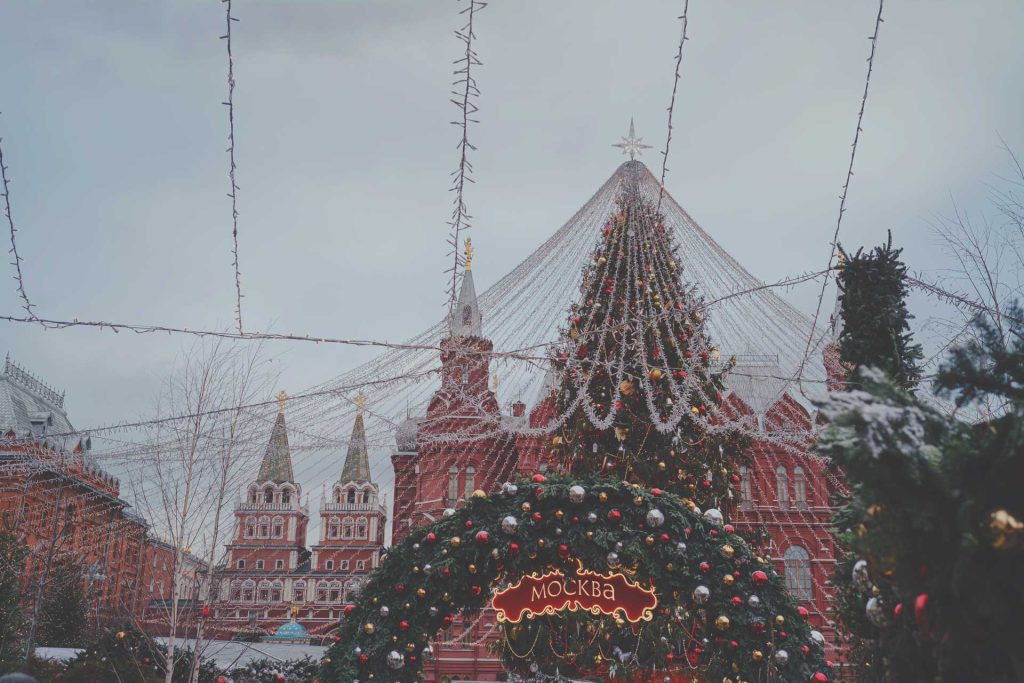
You celebrate (or observe) Christmas in Russia mostly according to the Orthodox calendar, so many families keep January 7 as the main religious holiday. You’ll notice that the season around Christmas, called Svyatki (Святки), runs from Christmas through Epiphany (January 19). During Svyatki, people attend church services, share large family meals, and take part in customs that mix prayerful observance with playful traditions.
If your family fasts before Christmas, you’ll break the fast with a special meal on Christmas Eve. You might prepare sochivo (сочиво) or kutya (кутья) — sweet grain dishes made with wheat, poppy seeds, honey, and dried fruits — and you may add pirogi (пироги), baked fish or roast meat, and Olivier salad (салат Оливье). You’ll often enjoy vareniki or pelmeni with sour cream and warm drinks like sbiten or tea to fight the winter cold.
Along with my lesson, I recommend that you introduce your child to these customs by telling stories about the household rituals
- Invite them to help make kutya or pirogi: they’ll learn vocabulary for ingredients and actions (mix, stir, roll, bake).
- Take the family to a local liturgy or show a short video of a church service; then talk about words like altar, choir, candles, and blessing.
- Play traditional carols (колядки) and encourage your child to sing along; then explain the words in English and Russian.
During Svyatki, you’ll see fortune-telling games, house blessings by priests, and acts of charity. You can use these customs to teach your child phrases like “Happy holidays,” “bless our home,” “share with neighbors,” and “sing carols.” Because many Russian families celebrate the New Year with the decorated ёлка and Ded Moroz (Дед Мороз), you can compare New Year and Christmas vocabulary with your child and explain how both holidays form one long festive season.
Section 2: Christmas in English-Speaking Countries
You’ll want your child to recognize that English-speaking countries share familiar symbols but adapt them to local climate and history. I will teach comparisons, so your child understands different settings and uses new words in context.
United States: You’ll see most American families start decorating right after Thanksgiving. They hang lights, wreaths, and ornaments, and they often center family time around a decorated tree. Teach your child that Santa Claus delivers gifts on Christmas Eve, and that Americans frequently hang stockings and leave cookies and milk for Santa. Ask your child to describe a typical American dinner — roast turkey or ham, mashed potatoes, pies — and practice vocabulary for foods, tableware, and actions (slice, carve, serve, pass).
United Kingdom: Explain that British families love tradition: they pull Christmas crackers (paper tubes that pop and contain small gifts), wear paper crowns from the crackers, and serve Christmas pudding for dessert. Teach your child about Boxing Day (December 26), carol services, and the King’s Speech. Use vocabulary such as cracker, pudding, crown, and Boxing Day, and role-play pulling a cracker and reading the joke inside.
Australia and New Zealand: Make sure your child understands that in the Southern Hemisphere, Christmas often falls in summer. Show images of beach barbecues, outdoor carol concerts, and cold-seafood dinners. Teach words like beach, barbecue, pavlova, and sunscreen alongside traditional words like tree, lights, and Santa. Ask your child to imagine Santa in shorts and to describe a Christmas picnic in English.
Common traditions across these countries:
- Christmas tree: Ask your child to describe a decorated tree and name ornaments (bauble, star, angel).
- Caroling: Organize a simple carol sing-along at home; teach the verbs’ sing,’ ‘perform,’ and ‘join.’
- Santa Claus: Role-play as Santa; practice polite requests and gift vocabulary.
- Gift-giving: Teach phrases like “open presents,” “wrap a gift,” and “thank you.”
- Decorations and food: Use decorating and cooking activities to teach vocabulary for lights, wreaths, garlands, roast, bake, and pudding.
Section 3: Key English Vocabulary for Christmas (with Russian equivalents)
You can use this vocabulary list when you decorate, cook, sing, or play. Read each word with your child, show pictures, and use the items in real activities.
- ornament — украшение (украшение на ёлку, игрушка)
- Use: “Hang the ornament on the branch.” / «Повесь украшение на ветку.»
- mistletoe — омела (омела, под которой целуются)
- Use: “They stood under the mistletoe.” / «Они стояли под омелой.»
- stocking — рождественский чулок / чулок для подарков
- Use: “Put candy in the stocking.” / «Положи конфету в чулок.»
- carol — рождественская песня / колядка
- Use: “We will sing a carol tonight.” / «Мы споём колядку сегодня вечером.»
- reindeer — северный олень
- Use: “Rudolph is a reindeer.” / «Рудольф — северный олень.»
- wreath — венок
- Use: “Hang the wreath on the door.” / «Повесь венок на дверь.»
- garland — гирлянда
- Use: “Wrap the garland around the banister.” / «Обмотай гирлянду вокруг перил.»
- nativity — рождественская ясли / вертеп
- Use: “The church shows a nativity scene.” / «В церкви выставили вертеп.»
- tinsel — мишура
- Use: “Don’t use too much tinsel.” / «Не используй слишком много мишуры.»
- advent — адвент (период подготовки к Рождеству)
- Use: “We open an Advent calendar each morning.” / «Мы открываем календарь Адвента каждое утро.»
- sleigh — сани
- Use: “Santa rides his sleigh.” / «Санта едет в санях.»
- eggnog — эггног (яичный напиток)
- Use: “Try a small cup of eggnog.” / «Попробуй немного эггнога.»
- yuletide — рождественский период / праздничный сезон
- Use: “Enjoy the yuletide season.” / «Наслаждайтесь рождественским сезоном.»
- holly — падуб / остролист
- Use: “We will put holly in the centerpiece.” / «Мы положим падуб в центр композиции.»
Teaching tips:
- Repeat words in short phrases: “red ornament,” “green wreath.”
- Use plural forms: ornaments — украшения, stockings — чулки.
- Practice everyday phrases: “Sing a carol,” “Hang a wreath,” “Fill the stocking.”
Section 4: Engaging Activities You Can Do at Home
You’ll help your child remember English vocabulary words best when you combine language with action. Here are activities that work for different ages.
- Write a letter to Santa in English
- Why: You’ll practice writing, sentence structure, polite requests, and vocabulary.
- How:
- Help your child brainstorm items they want and kind deeds they did.
- Use this structure: Greeting: “Dear Santa,” Introduction: name and age, Body: good deeds and request, Closing: “Thank you,” signature.
- Encourage phrases: “Could you please…,” “I would like…,” “Thank you for…”
- Add a drawing and let your child address the envelope.
- Example you can model for younger children: Dear Santa, My name is Sasha. I am six years old. I helped my mother set the table and fed our cat. Could you please bring a small book and a red ornament? I will leave you cookies and milk. Thank you, Sasha.
- Make and label Christmas ornaments:
- Why: You’ll teach nouns, colors, and adjectives while using fine motor skills.
- Materials: colored paper, glue, scissors, string, markers, and beads.
- How:
- Cut shapes: star, bell, stocking, reindeer, wreath.
- Let your child decorate each ornament and write the English word on it, with the Russian equivalent underneath.
- Hang the ornaments on a small tree or on a string so your child can point to them and say the words in English.
- Language practice: “I made a gold star ornament.” / «Я сделал золотую звезду-украшение.»
- Play holiday vocabulary games:
- Why: Games make repetition enjoyable and help pronunciation.
- Simple games you can run at home:
- Bingo: Create cards with pictures and English words; call definitions or Russian equivalents.
- Charades: Your child acts out “carol,” “reindeer,” or “sleigh”; you guess.
- Matching: Match English words to picture cards and Russian words.
- Memory: Flip cards to match the English word with a picture.
- Variation for older children: Time challenge — list as many Christmas words as possible in 60 seconds.
- Cooking and decorating with English instructions:
- Why: You’ll use imperative verbs and food vocabulary naturally.
- How:
- Follow a simple recipe in English (decorate cookies, make a salad).
- Give commands: “Stir the dough,” “Roll the cookie,” “Sprinkle the sugar.”
- Label jars and utensils with English words: sugar, flour, bowl, spoon.
- Language focus: Verbs (mix, stir, bake), measurement words (cup, teaspoon), and adjectives (sweet, salty, warm).
- Sing carols and practice pronunciation:
- Why: Songs reinforce rhythm, intonation, and vocabulary.
- How:
- Choose simple carols (Silent Night, Jingle Bells) and print the lyrics with Russian translations.
- Sing line by line; have your child repeat each line.
- Point out tricky sounds: silent letters (kn in “know”), and consonant clusters (str in “string”).
- Encourage performance: Record a short family video and celebrate the progress.
- Cultural comparison project
- Why: You’ll build writing and speaking skills while deepening cultural awareness.
- How:
- Ask your child to compare Russian traditions with those in the USA, UK, or Australia.
- Create a simple poster with pictures, labeled in English and Russian.
- Present the poster to grandparents or friends in English: “In Russia, we… In the USA, people…”
- Use it as a family activity that prompts conversation and vocabulary recall.
Conclusion
I can turn Christmas into a rich language-learning experience for your child. I will give you words you can use while you decorate, cook, sing, and play. Use the vocabulary list with Russian equivalents to connect known terms with new English words. Encourage your child to write a letter to Santa, craft and label ornaments, play vocabulary games, and describe traditions from different countries. These activities build vocabulary, pronunciation, confidence, and curiosity. Invite your child to share family traditions with classmates or friends. When they describe how you make kutya, hang a wreath, sing a carol, or leave out cookies for Santa, they’ll practice English in meaningful ways. You’ll not only help them learn new words — you’ll help them understand the cultural stories behind those words, so English becomes a bridge to new experiences and shared celebrations.